
Best Wooden Montessori Toys in Australia
Wood is common in Montessori environments because it can be durable, simple and pleasant to handle. But wood itself is not what makes a toy Montessori-style. The stronger questions are: Is the activity purposeful? Is the child creating the action? Is the challenge appropriate? Is the individual product safe and well made?
Three things wood can offer, without turning material choice into a developmental claim
Wood can change a toy’s weight, feel and durability, but those practical differences should not be turned into claims that wooden toys provide richer neurological information than plastic.
Weight and feel
Different woods, finishes and shapes can feel distinct in the hand. That can make wooden toys satisfying to grasp and manipulate, but heavier is not automatically better.
Durability
Well-made wooden toys can last for years, especially simple blocks and puzzles. Durability still depends on construction, joints, finish and how the toy is used.
Visual simplicity
Many wooden toys use fewer electronic features and cleaner shapes. That can make the task easier to understand, but plastic toys can also be simple and purposeful.
What actually matters when buying a wooden toy
Do not rely on vague labels like “natural,” “non-toxic” or “Montessori.” Look at the actual product information and construction.
Good signs
- The manufacturer provides a clear age grade and safety information.
- Edges and corners are smooth with no visible splinters or cracks.
- Paint, stain or finish is intact and intended for children's products.
- Knobs, pegs, beads and glued parts feel secure.
- The toy is stable during normal use and does not tip unexpectedly.
- Replacement or missing pieces can be identified easily.
Red flags
- Flaking paint, splintering surfaces or cracked timber.
- Loose knobs, wheels, beads or glued decorative parts.
- Unknown age grading or unclear manufacturer information.
- Strongly damaged second-hand toys with uncertain coatings.
- Accessible magnets, button batteries or tiny components in a young child's toy.
- Marketing claims that substitute for actual product-safety information.
The 8 wooden picks at a glance
These real products cover baby grasping, threading, tool work, puzzles, pattern building, balancing and visual tracking. Choose a new type of play rather than buying several toys that repeat the same task.
| Pick | Best for | Age guidance | Before buying |
|---|---|---|---|
| Wooden star rattle | Grasping and sound | 0 to 12 months, per supplied title | Inspect wood and finish |
| BOHS caterpillar lacing toy | Threading and stacking | Check current listing | Supervise the cord and pieces |
| Farm screwdriver board | Tool use and hand control | Ages 3+, per supplied title | Count every component |
| Pattern blocks and smart sticks | Patterns and construction | Ages 3 to 5, per supplied title | Store small pieces securely |
| PlanToys Timber Tumble | Balance and prediction | Check current listing | Inspect edges and finish |
| Coogam colour-shape puzzles | Colour, shape and placement | Ages 3 to 5, per supplied title | Confirm piece dimensions |
| Elite Montessori ball tracker | Release and visual tracking | Check current listing | Check frame stability |
| Two wooden toddler puzzles | Matching and orientation | Ages 2 to 4, per supplied title | Inspect knobs and glued parts |
The 8 wooden picks, rewritten with stronger buying guidance
The selection method focuses on clear play value, adjustable difficulty, construction quality, age suitability and the child's active participation.
The child grasps, drops, stacks, fits, sorts, nests, builds or rearranges.
The activity can be simplified or extended as the child's ability changes.
Finish, joints, knobs, edges and moving parts matter more than a “natural” label.
Age grading, piece size, condition, coatings, magnets and batteries come before aesthetics.

Wooden Star-Shaped Baby Rattle
This compact wooden rattle gives babies one clear action and result. Moving the toy creates a sound, while the star outline offers several places to grasp.
- grasping
- sound
- cause and effect
- active, child-led use
Why it can work: Its simplicity makes the connection between hand movement and sound easy to notice without lights or recorded music.
Safety check: Confirm the current age and mouthing guidance. Inspect the wood and finish for cracks, splinters or peeling before every use.

BOHS Caterpillar Lacing Toy
Twenty wooden beads give children several ways to play. They can thread, stack, arrange and rebuild the caterpillar while working with a clear set of pieces.
- threading
- stacking
- sequence
- active, child-led use
Why it can work: The activity can change with ability, so the same set can move from simple placement to a longer threading sequence.
Safety check: The set contains multiple pieces and a cord. Follow the current age grade, supervise its use and store every bead and the lace together.

Wooden Farm Screwdriver Board, 16 Pieces
Turning a tool, steadying the board and aligning a fastener create a practical sequence with a visible result. The farm design gives each removable part a clear destination.
- tool use
- matching
- hand control
- active, child-led use
Why it can work: It combines matching with controlled wrist rotation and two-hand coordination without electronic prompts.
Safety check: Count every component after play. Inspect the tool and fasteners for damage and keep the set away from younger children.

142-Piece Wooden Pattern Blocks and Smart Sticks
This large set supports both model copying and free construction. Children can rotate shapes, compare lengths and combine pieces into pictures or structures.
- patterns
- spatial play
- construction
- active, child-led use
Why it can work: The challenge can move from loose exploration to pattern copying and original design, giving the set more than one use.
Safety check: Confirm the current age grade and piece dimensions. Store the many small parts securely, especially around younger siblings.

PlanToys Timber Tumble
A balancing game turns each move into a small prediction. The child places a piece, watches the structure and changes the next decision according to what happened.
- balance
- prediction
- turn-taking
- active, child-led use
Why it can work: The physical feedback is immediate. A stable structure or tumble tells the child something without an adult marking the attempt right or wrong.
Safety check: Confirm the current age guidance and piece dimensions. Retire pieces that develop cracks, splinters or damaged finishes.
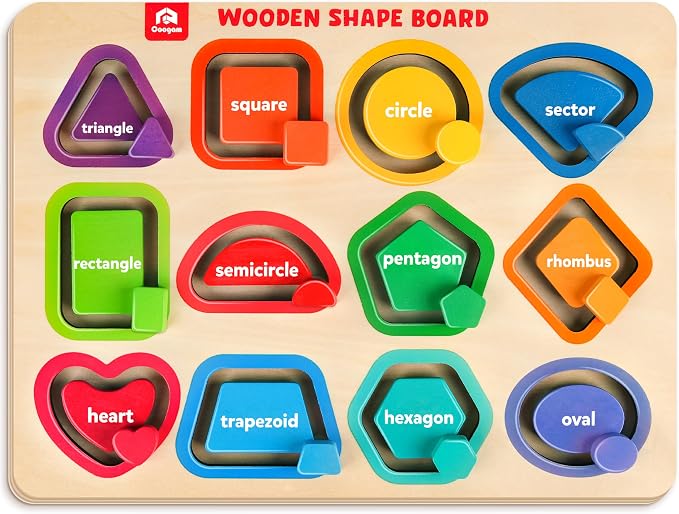
Coogam Wooden Colour Shape Puzzles
This set combines colour, shape and placement in a hands-on puzzle. It works best when the child already enjoys matching and is ready to compare more than one feature.
- colour matching
- shape
- placement
- active, child-led use
Why it can work: The activity offers a clear finish point but can also support sorting and pattern-making outside the board.
Safety check: Confirm piece size and age grading. For a broader comparison of this play type, see ToyBloom’s colour-sorting toy guide.

Elite Montessori Ball Tracker
A ball tracker creates a repeatable sequence: release a ball, follow its path and retrieve it at the bottom. The child controls the action and can repeat it without an electronic reset.
- tracking
- release
- repetition
- active, child-led use
Why it can work: The moving ball gives clear visual feedback and a predictable result while encouraging repeated hand-to-eye tracking.
Safety check: Confirm the current age grade and ball size. Check the frame for stability, secure rails and damaged wood before play.
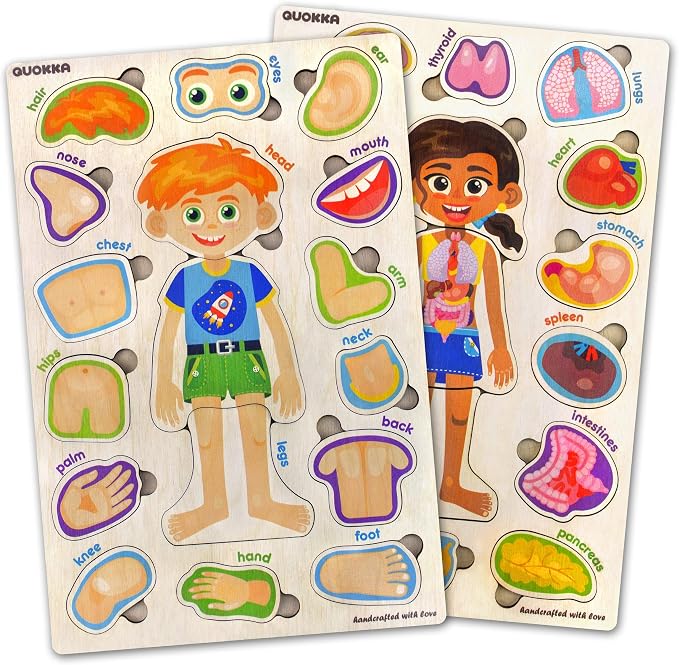
Two Wooden Montessori Toddler Puzzles
A pair of wooden puzzles offers a clear fitting task without needing a large number of pieces. Children can remove, rotate and return each piece, then repeat with the second design.
- puzzles
- orientation
- matching
- active, child-led use
Why it can work: The two boards create variety while keeping the action familiar: compare the outline, orient the piece and test the fit.
Safety check: Check knobs, glued parts, edges and the current product age grade. Stop use if any piece loosens or the finish is damaged.
Wooden toys still need the same careful safety checks as any other toy
A wood finish is not a safety certification. Follow the individual product's age grade, warnings and care instructions.
Australian Government toy-safety guidance
Product Safety Australia publishes guidance for children's toys and a mandatory standard for toys intended for children up to and including 36 months. For wooden toys, pay particular attention to small detachable pieces, damaged surfaces, age grading and any components added to the wood.
Watch for added components
Wooden toys can still contain magnets, batteries, metal fasteners, fabric cords or glued decorative pieces. Those components may create risks that have nothing to do with the timber itself.
What the evidence supports about Montessori materials and play
The safest conclusion is not that wood is superior. It is that simple, hands-on, well-matched materials can create useful opportunities for children to practise actions and solve problems.
Play matters more than the material label
The American Academy of Pediatrics describes play as important for child development and caregiver-child interaction. That supports giving children active, hands-on opportunities, but it does not show that wood creates richer neural input than plastic.
Montessori environments often use wood, but the philosophy is broader
Original Montessori writing emphasises purposeful activity, order, independence, sensory discrimination and carefully designed materials. Modern wooden toys may fit that philosophy, but the material alone does not make them Montessori.
Montessori program research is not product testing
Studies of Montessori education evaluate a learning environment and method. They do not establish that a particular wooden puzzle, block set or rattle will independently improve cognition, language or school readiness.
What this page can responsibly evaluate
ToyBloom can compare play clarity, durability, adjustability, age fit, construction and safety. It should avoid claims that wood is automatically warmer, neurologically richer, more educational or safer than other materials.
A safe, well-designed plastic toy can be more appropriate than a poorly made wooden toy. Choose the activity and the individual product first. Treat the material as one practical characteristic, not as proof of developmental value.
How to choose a wooden Montessori-style toy
Use these six checks before comparing brands or finishes.
1. Start with the child's current ability
Choose the next manageable action: grasping, dropping, fitting, nesting, sorting, building or composing shapes.
2. Check the actual construction
Look at edges, knobs, joints, glued parts, painted areas and moving pieces. A smooth product photo does not tell you how securely the toy is made.
3. Read the age guidance
Do not rely on a generic age range from an article. Use the manufacturer's age grade for the exact product.
4. Inspect the finish over time
Wood can crack, splinter or develop damaged coatings. Recheck the toy regularly, especially if it is dropped, mouthed or used outdoors.
5. Avoid material myths
Solid wood is not automatically safer than plywood or other engineered materials. Safety depends on the complete product and applicable requirements.
6. Prefer flexible play value
Pattern blocks, lacing beads, balancing pieces and puzzles can often support new challenges without needing a completely new toy.
Frequently asked questions about wooden Montessori toys
Direct answers without material myths.
Are wooden toys better for Montessori play?
Not automatically. Wood is common in Montessori environments because it can be durable, simple and pleasant to handle, but purpose, safety, developmental fit and active use matter more than material alone.
What should I look for when buying wooden toys in Australia?
Check the manufacturer's age grade, construction, surface finish, piece size and warnings. Inspect the toy regularly for cracks, splinters, loosened components and damaged coatings.
Are painted wooden toys safe?
They can be. Painted toys are not automatically unsafe, just as bare wood is not automatically safe. Use products intended for children, follow the age guidance and remove toys with flaking or damaged coatings.
Do wooden Montessori toys need to be solid timber?
No. Solid timber can be durable, but safe construction matters more than whether the toy is solid wood, plywood or another engineered wood product.
What wooden Montessori toys last the longest?
Flexible materials often have the best chance of staying useful. Pattern blocks, lacing beads, balancing pieces and puzzles can support new challenges as the child grows, although no toy has guaranteed longevity.
Are wooden toys more sensory than plastic toys?
Not in a way that justifies a blanket developmental claim. Different materials can feel, sound and weigh differently. The quality of the activity and the child's engagement are more important than assuming one material is neurologically richer.