
Best Toys for Language Development in Toddlers
The best language toys give toddlers something worth noticing with another person. A word, sound, light, texture or movement can start the exchange. The learning happens when an adult joins in, names what is happening and leaves room for the child to respond.
What makes a toy useful for language?
A toy does not need an enormous vocabulary. It needs to make back-and-forth play easy.
You and the child can notice the same light, sound, texture or action.
A clear sound gives the child a reason to pause, look and anticipate what comes next.
Body parts, colours, animals, actions and familiar objects connect easily to daily life.
Pressing, waiting, copying and responding create a simple conversational rhythm.
The toy starts the moment. The adult builds the language.
Instead of asking “What is this?” again and again, describe what the child is already doing. “Shake, shake.” “Purple puppy.” “The light is on.” Then pause.
That short pause gives a toddler room to look, gesture, vocalise, copy or take another turn.
The language-rich play loop
The best language-development toys at a glance
These six toys do different jobs. Two provide direct spoken-word content. The others create useful openings for sound play, imitation and parent-led conversation.
| Toy | Best for | How language enters the play | Suggested age |
|---|---|---|---|
| Fisher-Price Smart Stages Puppy | First words | Spoken words, songs, body-part prompts and responsive touch points | 6 months and up |
| LeapFrog My Pal Violet | Personalised words | The child's name and favourite things appear in songs and activities | 6 to 36 months |
| Baby Einstein Go Opus Go | Active sound play | Music, lights, movement and cause-and-effect action words | 3 months to 5 years |
| VTech Sensory Sounds Musical Cube | Listening and music | Animals, instruments, melodies and repeatable button play | Follow the listing age grade |
| Lamaze My First Rattle | Early sound imitation | Shake, rattle, bite and stop are easy words to model | Follow the listing age grade |
| Lamaze Freddie the Firefly | Sensory vocabulary | Textures, colours, crinkles, squeaks and peekaboo play | Birth and up |
Find the right type of toy
Select the kind of play you want. This finder compares functions, not medical or developmental outcomes.
These are the two strongest choices when you specifically want clear recorded words and phrases. Use the toy's word, then connect it to the child: “Hand. Your hand. My hand.”
Its animal and instrument theme supports listening and anticipation. Pause the toy occasionally so the child can request another turn with a look, gesture, sound or word.
These toys do not supply much spoken language. That is useful when you want the adult's voice, facial expression and timing to lead the interaction.
Use short action words while the child reaches or moves: “Go,” “stop,” “crawl,” “fast,” “turn” and “again.”
Six toys for words, sounds and shared conversation
Our order reflects how directly each toy supports the topic of this guide. A lower-ranked sensory toy can still be the better choice for a younger baby.
Each pick has an identifiable role in language-rich play.
The toy gives an adult and child something to notice together.
Sounds or actions can be repeated without complicated setup.
No toy is described as speech therapy or a guaranteed route to first words.
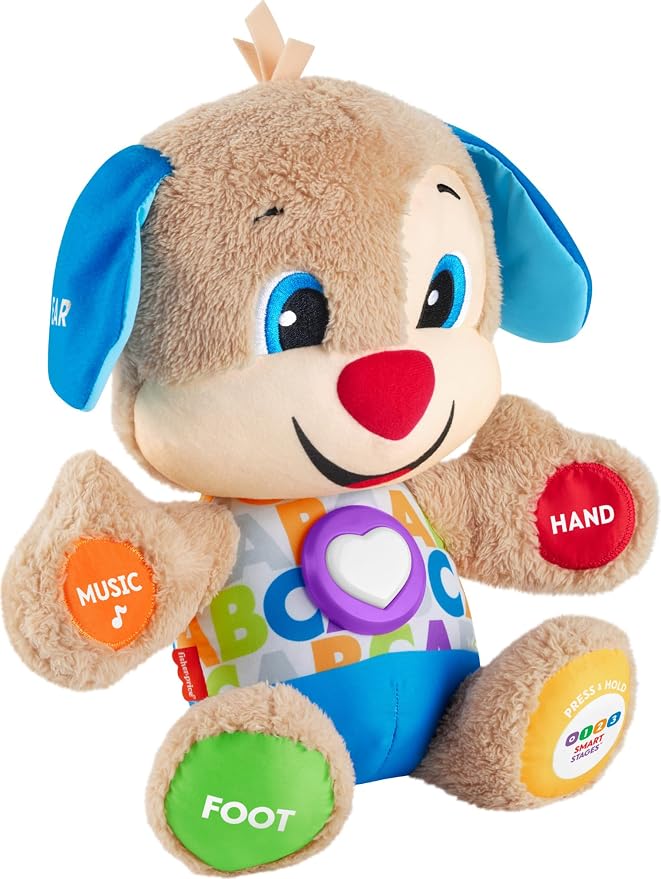
Fisher-Price Laugh & Learn Smart Stages Puppy
This plush puppy is the most direct language pick in the group. Touch points on the hands, foot, ear and light-up heart trigger songs, sounds and phrases. Its learning content introduces more than 100 first words across familiar topics such as body parts, colours, shapes and numbers.
- Use one body-part button at a time
- Copy the word, then point to the child's body
- Pause after a familiar line
- Keep the volume comfortable
Keep in mind: A large library of phrases can become background noise. Short, shared sessions are more useful than leaving every sound running.
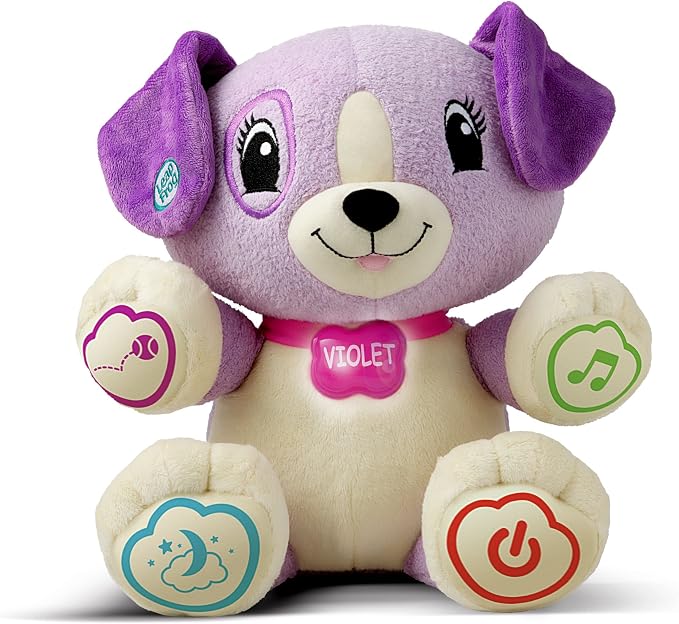
LeapFrog My Pal Violet
My Pal Violet can be personalised with a child's name and favourite food, colour and animal. The Smarty Paws version includes more than 15 activities, with songs, playful responses and touch-sensitive paws that make cause and effect easy to notice.
- Personalise it before regular play
- Repeat the child's name naturally
- Hold paws together for a shared turn
- Sing only the parts the child enjoys
Keep in mind: The manufacturer warns that soft toys should stay out of the sleep environment for babies under 12 months.
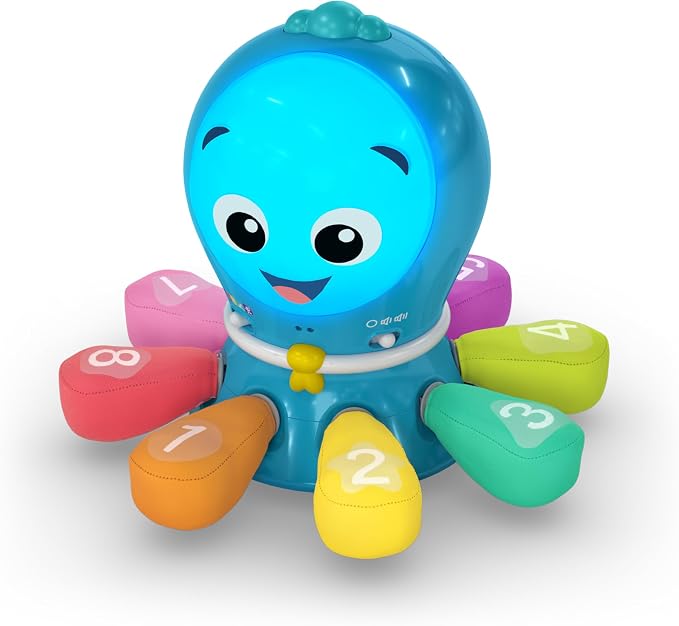
Baby Einstein Ocean Explorers Go Opus Go
Go Opus Go is a music-and-lights activity toy designed to change with a child's movement stage. It is not the strongest direct vocabulary toy here. Its value is the active play around reaching, crawling, chasing, starting and stopping.
- Use one action word repeatedly
- Wait before restarting the toy
- Copy the child's excited sounds
- Match play to the child's motor stage
Keep in mind: Music and lights can hold attention without creating conversation. Join the play and build in pauses.
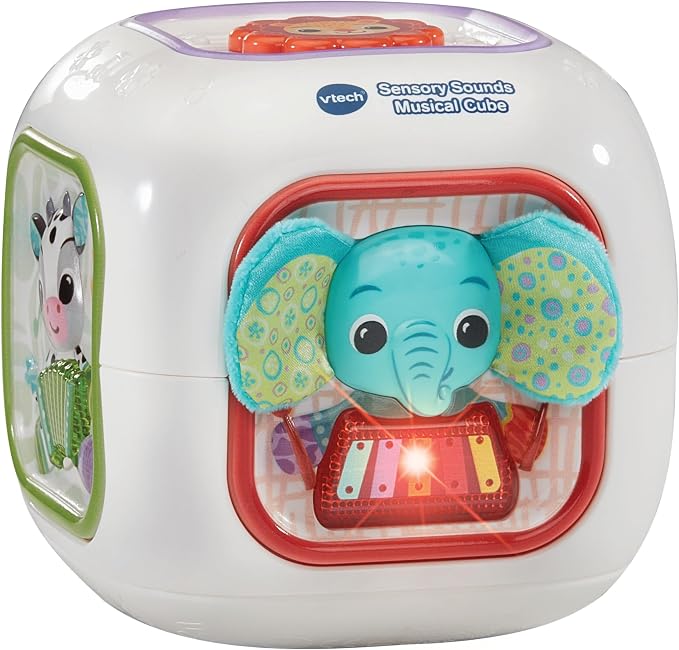
VTech Sensory Sounds Musical Cube
Each side of this musical cube features an animal and instrument theme. Buttons, textures, music and sound give babies several ways to make something happen, listen and try again.
- Name one animal at a time
- Copy a sound with your voice
- Contrast “loud” and “quiet” gently
- Pause between activations
Keep in mind: Confirm the Australian listing's age grade and battery information before purchase.
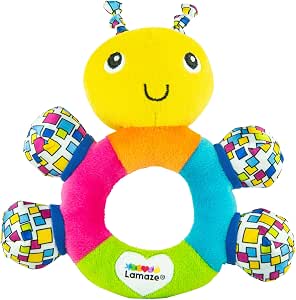
Lamaze My First Rattle Teething Toy
A simple rattle gives a baby immediate feedback: move it and a sound happens. It does not provide spoken vocabulary, so the adult's voice stays central. That makes it well suited to early sound copying and short action words.
- Shake slowly enough to watch
- Copy the rhythm with your voice
- Offer the child a turn
- Name the action, not every feature
Keep in mind: Inspect teethers and seams regularly. Stop using a toy if it tears, cracks or releases a small part.
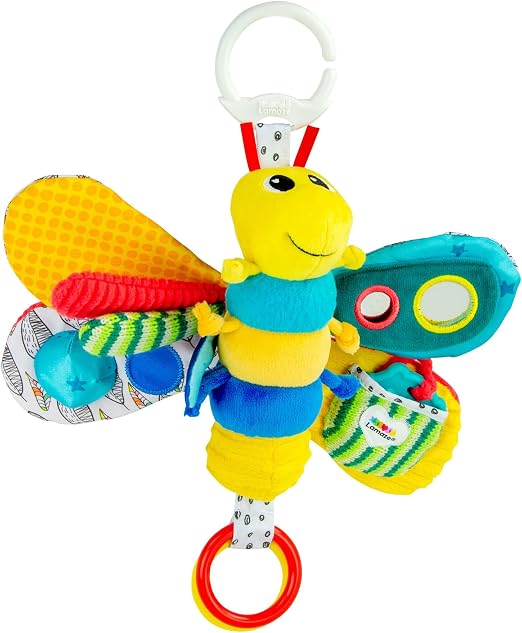
Lamaze Freddie the Firefly
Freddie combines a soft velour body with bright patterns, crinkly wings, a peekaboo mirror, a squeaker, clinking rings, a teether and knotted antennae. Those features offer many things to notice without playing recorded speech.
- Follow the feature the baby chooses
- Use sound effects and facial expression
- Play peekaboo with the mirror
- Repeat one describing word
Keep in mind: Freddie supports sensory exploration, not direct word teaching. The language value comes from the interaction around it.
How the six toys create language opportunities
This editorial profile compares what is built into each toy. It is not a clinical score and does not predict a child's progress.
Longer bars mean the toy includes more of that feature. A short spoken-word bar does not mean a toy has little play value. It means an adult supplies more of the language.
How to use any toy to encourage first words and sounds
You do not need to narrate every second. A few well-timed words are easier to notice.
Talk about the button, wing, light or sound they chose rather than redirecting the play.
Try “purple puppy,” “light on,” “shake fast” or “more music.”
If the child squeals, taps or says part of a word, copy it. Then add one small idea.
A response can be a look, reach, smile, sound, gesture or word.
Use “hand” at bath time or “go” at the park so the word is not tied to one toy.
A 20-second example
That exchange is short, relevant and responsive. No quiz is needed.
What research says about toys and toddler language
The evidence supports interaction and play. It does not support promises that a particular retail toy will make a toddler talk.
Back-and-forth matters
Australia's Pregnancy, Birth and Baby guidance recommends talking, reading, singing and responding to children's attempts to communicate. The practical takeaway is simple: use the toy as a shared topic, then respond to the child.
Australian learning-to-talk guidance →More electronics do not automatically mean more language
In an observational study of parent-infant play, electronic toys were associated with fewer adult words, fewer conversational turns and fewer parent responses than traditional toys and books. The study was small, so it should guide thoughtful use rather than support a blanket ban.
Read the JAMA Pediatrics study →Play supports connection
The American Academy of Pediatrics describes play as an important setting for caregiver-child interaction and development. A useful toy leaves space for a child's own actions and an adult's responsive participation.
Read the clinical report on play →Recorded words are a prompt, not a conversation
A talking toy can introduce a clear label or song. It cannot notice what the child means, adjust its response or build on a gesture in the same way another person can. Use its audio as the first turn, not the whole exchange.
See the five-step play method →Australian safety checks for plush and electronic toys
Sound-making toys can contain batteries, hard internal parts and detachable pieces. Check the current product listing and the toy itself.
Match the age grade
The ACCC advises buying toys suitable for the child's age. Toys intended for children up to and including 36 months are covered by a mandatory standard designed to reduce risks from small parts.
Read the mandatory standard →Inspect seams and attachments
Check plush toys for loose thread, weak seams, exposed filling and poorly attached eyes, buttons or rings. Stop using a toy that is tearing or falling apart.
Read the kids' toys guide →Secure the battery compartment
Australian guidance says battery compartments on toys for children up to 36 months must require a tool to open. Keep spare and used batteries out of reach.
Read the button-battery guide →Continue exploring by age and play style
These ToyBloom guides help you compare the same skills from a different angle.
Frequently asked questions
Quick answers for choosing and using language-development toys.
Which interactive soft toys help toddlers learn their first words and sounds?
Fisher-Price Smart Stages Puppy and LeapFrog My Pal Violet provide the clearest spoken-word content in this guide. Lamaze Freddie the Firefly and My First Rattle do not teach words directly, but they give adults easy sounds, textures, colours and actions to name during shared play.
Can a toy teach a toddler to talk?
No toy can teach speech by itself. A useful toy can hold a child's attention and create opportunities for an adult and child to notice, name, copy, pause and respond together.
Are talking toys good for language development?
They can provide clear repetition and introduce words, but recorded speech should supplement rather than replace responsive conversation with a caregiver.
How should I use a toy to encourage first words?
Follow the child's attention, use one or two short words, copy their sound or action, pause for a response and repeat the word naturally. Avoid turning play into a test.
What should I check before buying an electronic toddler toy?
Check the age grade, construction, seams, detachable pieces and battery compartment. Australian guidance says battery compartments on toys for children up to 36 months must be secured so they can only be opened with a tool.
What if I am concerned about my toddler's speech?
A toy guide cannot assess speech, language or hearing. Discuss concerns with a child health nurse, GP, speech pathologist or other qualified health professional.