
Best Montessori Toys for 3 Year Olds in Australia
At three, play often becomes more planned, more verbal and more sustained. Children may build with a goal, act out familiar experiences, compare quantities, complete increasingly complex puzzles and spend longer refining a drawing or construction.
What matters most at age three
The goal is not to find a toy that looks Montessori. It is to find an activity with a clear purpose, an understandable challenge and enough room for repetition or variation. At this age, that often means more complex construction, simple planning, sorting and patterning, richer conversation, early quantity play, practical handwork and realistic pretend play.
Three is also too broad an age to use rigid rules. One child may happily complete a framed jigsaw while another is more interested in building, drawing or role-play. Use the child's current abilities and interests to decide what comes next.
Why the same toy can be easy for one three-year-old and frustrating for another
Age labels are a starting point. Experience, language, hand control, attention and familiarity with the material all change the level of challenge.
A tower may turn into a house, bridge or garage because the child is beginning to hold an idea in mind while building.
Threading, turning puzzle pieces, drawing and placing small construction pieces can become more deliberate.
Children may narrate what they are building, name categories, act out familiar routines and explain what they want another person to do.
Concrete materials can help children compare more and less, count small sets and notice relationships without turning play into formal lessons.
Compare the 8 real products
These are exact products and affiliate destinations supplied to ToyBloom. Prices, sellers and included parts can change, so use the current listing as the final reference.
| Pick | Best for | Main action | Age shown in title |
|---|---|---|---|
| Wooden Farm Screwdriver Board | Tool use | Align and turn fasteners | 3+ |
| Two-Piece Wooden Puzzle Set | Visual problem-solving | Match, rotate and place | 2 to 4 years |
| Zonon Transportation Lacing Cards | Threading | Guide and pull a lace | Check listing |
| 240-Piece Interlocking Building Blocks | Construction | Connect, build and revise | Check listing |
| 14-Piece Sensory Bin Tool Set | Transfer play | Scoop, pour, grasp and inspect | Check listing |
| 7-in-1 Wooden Climbing Set | Indoor movement | Climb, balance and change routes | Check listing |
| Giraffe Bouncy Horse Hopper | Bouncing play | Hold, balance and bounce | 2+ |
| HONEY JOY Ride-On Excavator | Movement and pretend play | Ride, steer, scoop and transport | 3+ |
8 Montessori-inspired toys for 3 year olds
Each pick gives the child an active role. Some are close to traditional practical handwork, while others are broader Montessori-inspired options for construction, movement or realistic pretend play.
The child turns, fits, threads, builds, transfers, climbs or steers.
The action is understandable and can often be simplified.
The material supports another attempt, route, design or story.
The current age grade, warnings and condition outrank the label.

Wooden Farm Screwdriver Board
This 16-piece board turns fastening into a focused hand task. The child lines up the screwdriver, applies pressure and rotates it to loosen or tighten a piece. The farm theme adds recognisable pictures without changing the central action.
- 16-piece format stated in the supplied title
- Uses alignment, pressure and rotation
- Can begin with one fastener at a time
- Check every loose component and tool before use
Check first: Confirm the current product age grade, piece size and whether every fastener remains securely attached as designed.
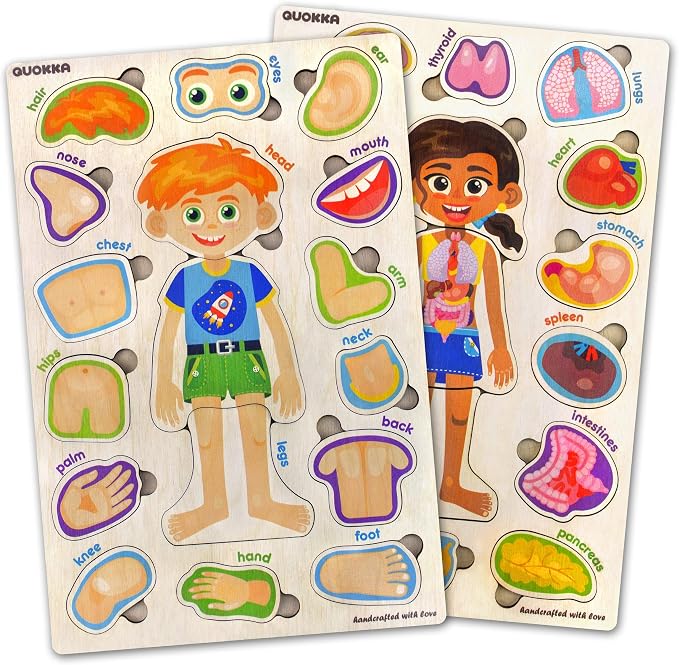
Two-Piece Wooden Montessori Puzzle Set
This two-puzzle set gives a child a visible place, test and adjust cycle. Offer one board at a time if both create too many choices. Puzzle difficulty depends on more than age, so watch how much of the task the child can already solve.
- Two wooden puzzles in the supplied description
- Clear visual matching and placement task
- One board can be presented at a time
- Links naturally to more complex puzzles later
Check first: Confirm piece size, finish, current age grade and included designs. Read the toddler puzzle guide for difficulty tips.
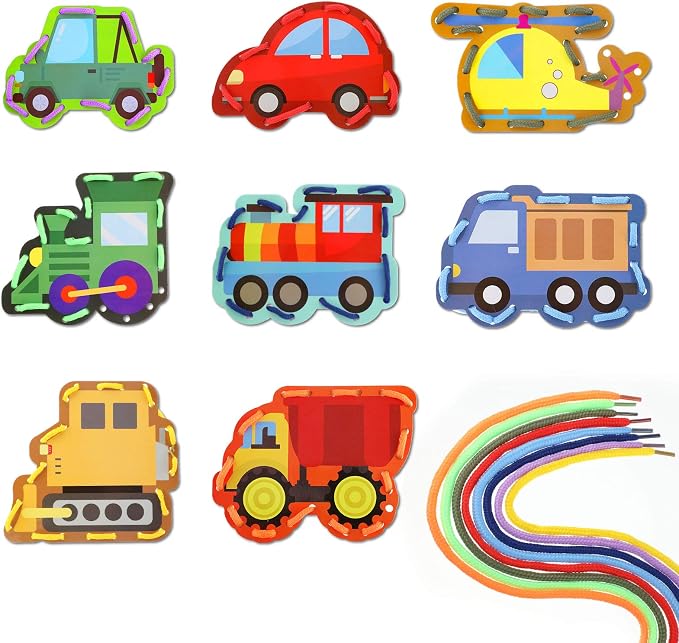
Zonon Transportation Lacing Cards
The supplied title lists eight cards with transportation patterns. Each card asks the child to aim the lace, push it through an opening, pull it across and decide where to go next. Begin with a simple section instead of requiring a complete border.
- Eight patterns stated in the supplied title
- Uses both hands in different roles
- Can be paused and resumed
- Transportation theme may invite naming and stories
Check first: Confirm the manufacturer's age grade, cord length, card material and the security of the lace ends.
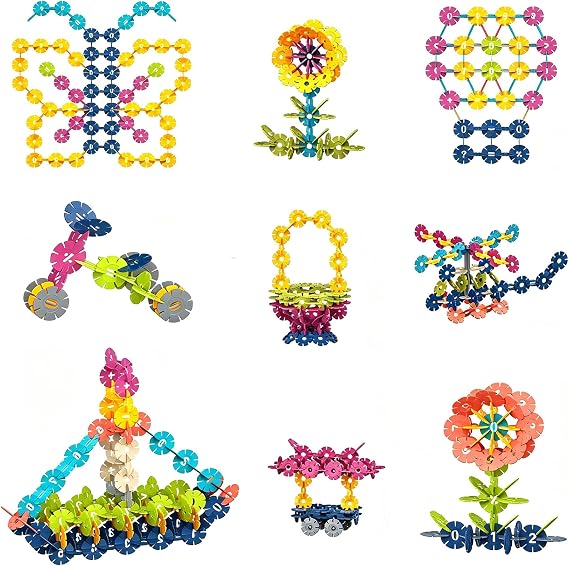
240-Piece Interlocking Building Blocks
A large interlocking set gives children many ways to connect, separate and rebuild. Start with a small tray of pieces so the construction idea stays visible. The value is in the physical design process, not in the word STEM on the listing.
- 240 pieces stated in the supplied title
- Supports joining, separating and rebuilding
- A smaller selection can reduce visual clutter
- Finished designs can become part of pretend play
Check first: This set contains many loose pieces. Confirm the exact age grade and dimensions, supervise as directed and keep every small component away from younger siblings.

14-Piece Sensory Bin Tool Set
The supplied set includes wooden tongs, spoons, bowls, a plate, hammer, magnifying glass and rolling pin. That makes it flexible for scooping, pouring, grasping, inspecting and simple pretend work. Offer only the tools needed for one setup instead of placing all 14 out at once.
- 14 tools stated in the supplied title
- Several grasp and transfer options
- Easy to simplify by choosing two or three tools
- Can support practical-life-style scooping and pouring
Check first: Choose only age-appropriate filler materials. Water, dry food, beads and natural objects create different hazards, so the bin contents matter as much as the tools.

7-in-1 Foldable Wooden Climbing Set
This is the largest item in the guide and offers several routes for climbing and movement. A child can approach the structure in different ways, but the adult must control setup, clearances and supervision. Foldability can help storage, yet hinges and locks become part of the safety check.
- Seven-in-one format stated in the supplied title
- Wooden foldable climbing design
- Supports several movement routes
- Needs a clear fall zone and stable surface
Check first: Confirm dimensions, load limit, age grade, assembly, locks, wall and furniture clearance, surface requirements and adult supervision. Compare more options in the toddler climbing toy guide.
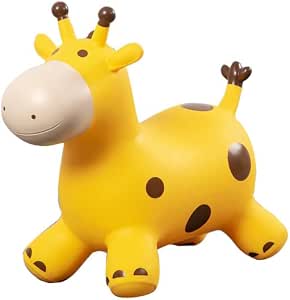
Giraffe Bouncy Horse Hopper
The inflatable giraffe swaps wheels for bouncing. The child holds on, pushes with both feet and adjusts their body as the toy moves. It needs a clear, level zone with room around every side.
- Ages 2+ stated in the supplied title
- Inflatable animal ride-on format
- Child-powered bouncing action
- Lightweight design but requires clear space
Check first: Follow the inflation instructions, inspect the plug and surface, avoid sharp edges and stairs, and consider floor grip and footwear together.

HONEY JOY Kids Ride-On Excavator
This ride-on combines child-powered movement with an adjustable digging bucket, pulling cart, helmet, three toy stones, sound and under-seat storage. A simple scooping route can turn movement into a repeatable construction story.
- 3+ stated in the supplied title
- Adjustable bucket and pulling cart
- Includes helmet and three toy stones
- Under-seat storage and sound feature
Check first: Confirm assembly, current load limit, battery compartment, bucket clearance, loose pieces and the suitability of the riding surface. See the ride-on toy guide for a fuller comparison.
What to check before buying toys for a three-year-old
A Montessori label is not a safety certification. Always follow the product's own age grade and warnings, and use official Australian Product Safety guidance when you are unsure.
Use the Australian Government toy-safety guidance
Product Safety Australia explains common toy hazards, including choking risks, damaged toys and supervision. For products intended for children up to and including 36 months, a specific mandatory standard also applies.
Match the check to the product
For the screwdriver board, lacing cards, construction pieces and sensory tools, inspect every loose component and cord. For climbing equipment, follow assembly, lock, clearance and surface instructions. For the hopper and excavator, check inflation or assembly, steering, stopping space and the manufacturer's riding guidance.
Use the exact product listing and packaging. A general age-guide article cannot replace the current manufacturer's instructions.
What the evidence supports, and what it does not
Research can explain the wider value of play and Montessori education, but it cannot prove that one marketplace toy guarantees a developmental outcome.
Play is a context for learning, not a product claim
The American Academy of Pediatrics has described play as important for development and caregiver-child interaction. That does not mean a specific puzzle, block set or doctor kit has been clinically proven to improve intelligence or school readiness.
Montessori education has evidence, but retail toys are a separate question
A longitudinal Montessori preschool study and a systematic review have reported positive outcomes for Montessori educational programs. These studies evaluate educational environments and methods. They do not validate every product sold with the word Montessori in its title.
Original Montessori sources are useful for philosophy
Maria Montessori's original writing emphasizes the prepared environment, purposeful activity, sensory experience, independence and carefully designed materials. It is a better basis for understanding the philosophy than modern marketing language.
What this page can responsibly say
ToyBloom can evaluate whether an activity is simple, active, repeatable, adjustable, realistic and age-appropriate. It should avoid saying that a product creates empathy, teaches fractions, causes a tripod grip or guarantees cardinality unless there is direct evidence for that claim.
Development varies widely at age three. Research on play or Montessori education does not establish that a particular consumer toy will accelerate language, maths, fine-motor skills or executive function. The safer conclusion is that well-matched materials can create useful opportunities to practise actions and ideas the child is already ready to explore.
How to choose the right Montessori-style toy for a three-year-old
Use these questions before comparing brands or price.
1. What is the child already doing?
Start from the current level. A child who can complete simple inset puzzles may be ready for interlocking pieces. A child who only wants to stack may get more value from blocks than a counting set.
2. Is there one understandable challenge?
Good materials make the problem visible. A fastener turns, a puzzle piece fits, a lace goes through the hole or a construction joins securely.
3. Can the difficulty change?
A strong long-life toy lets you reduce the number of pieces, simplify the task or introduce a harder variation later.
4. Does the child create the action?
Prefer materials that respond to the child's movement rather than doing most of the work through lights, sounds or automatic sequences.
5. Does it connect to real life or open-ended ideas?
Tools, construction materials, transfer work and realistic vehicles can support different projects and stories without requiring a fixed script.
6. Is the actual product safe for this child?
Check the manufacturer's age grade, piece size, construction, magnets, batteries and condition. Do not rely on a generic article age range.
Frequently asked questions
Direct answers to common questions about toys for three-year-olds.
What Montessori toys are best for a 3 year old?
Useful choices include a screwdriver board, manageable wooden puzzles, lacing cards, construction pieces, sensory tools, climbing equipment and child-powered movement toys. Choose the option that creates a clear next challenge while matching the exact product's age grade and warnings.
How many puzzle pieces should a 3 year old do?
There is no universal number. Puzzle experience, piece size, picture complexity and frame support all matter. Start with a puzzle the child can partly solve and increase complexity when it becomes easy.
Are pretend-play toys Montessori?
Commercial pretend-play kits are not a defining historical Montessori material. Realistic child-led pretend play can still fit a Montessori-inspired home when the props reflect real experiences and the child controls the story.
Do Montessori toys for 3 year olds need to be wooden?
No. Wood is common in Montessori environments, but purpose, simplicity, safety, durability and active use matter more than material alone.
Are small construction pieces suitable for a 3 year old?
Only when the exact product is age-graded for the child. Check every component's size, supervise as directed and keep small pieces away from younger siblings.
Are climbing and ride-on toys Montessori?
They are better described as Montessori-inspired movement toys. They can keep the child active and in control, but safe setup, fit, space and supervision matter more than the label.
What makes a toy Montessori-style at age three?
A clear purpose, active use, understandable feedback and an appropriate challenge are more useful indicators than the label. A toy can also be open-ended if the child remains the one planning and creating the action.