ToyBloom road book

11 Best Ride-On Toys for Toddlers in Australia

The best toddler ride-on is one the child can control, stop and get off without being trapped by the design. For most confident walkers, a stable foot-to-floor car is the simplest place to begin. Choose a bouncy hopper for indoor whole-body play, a multi-mode rocker for variety, or an electric train only when its speed, space and supervision demands genuinely suit the household.

Quick answer

Best all-round multi-stage choice: the 5 in 1 Rocking Horse combines rocking, balance-board, bike, walker and ball-play modes. Best classic foot-to-floor car: the Little Tikes Princess Cozy Coupe offers child-powered movement plus a parent-push option. Best compact first wheels: the Scuttlebug has a three-wheel layout and folds into a smaller package. Best pretend-play pick: the HONEY JOY Excavator turns riding into a digging game. Always follow the current manufacturer age, weight and assembly instructions.

Affiliate disclosure: ToyBloom may earn from qualifying Amazon purchases at no extra cost to you. Product details, sellers, included parts, availability and age guidance can change. This guide is based on published product information and safety research, not claims of hands-on testing.

A ride-on car travelling through a playful landscape
Start with control

What Makes a Good Toddler Ride-On?

A ride-on looks simple, but it asks a child to coordinate sitting, steering, pushing, stopping and judging space. The most useful model is not necessarily the one with the most sounds or accessories. It is the one whose main action is obvious and manageable at the child’s present stage.

Start with fit. A seated child should be able to place their feet where the manufacturer intends, use the steering comfortably and dismount without an awkward drop. A parent handle can be convenient, but it does not turn an unsuitable product into a suitable one. Likewise, a wide body may feel steady while taking up far more turning space than expected.

Think about the route before the vehicle. A smooth hallway, compact courtyard, lawn and sloped driveway create very different risks. Ride-ons belong away from stairs, pools, roads, driveways, fireplaces and changes in level. For products intended outdoors, look at heat, weather exposure and where the toy will dry and be stored.

Fit before featuresFeet, seat, steering and dismount should make sense together.
Speed must stay manageableChild-powered does not mean risk-free, especially on slopes.
Storage is part of the choiceMeasure the product and the route to its parking spot.

Find your route

Use these buttons to narrow the detailed reviews by the main style of play.

At-a-glance map

Ride-On Toy Comparison

The table compares the main action described in each supplied listing. “Check listing” means the current product page and packaging should settle the detail, not an assumption based on the product photograph.

Ride-onMain movementListed ageStrongest useImportant check
5 in 1 Rocking HorseRock, push, ride and balance1 to 3 yearsSeveral play modesReconfiguration and locking points
Giraffe Bouncy HopperBounce2+ yearsIndoor active playInflation and clear floor space
VEVOR Push CarFoot-to-floor1 to 3 yearsClassic car playStability, sound and storage lid
John Deere Johnny TractorFoot-to-floorCheck listingFarm vehicle fansBattery compartment
Princess Cozy CoupeFoot-to-floor or parent push18 months to 5 yearsLonger stated age spanFloorboard and handle setup
Scuttlebug BeetleThree-wheel scoot1 to 3 yearsCompact first wheelsFolding joints and surface
VTech Alphabet TrainPush or rideCheck listingLetters and train playLoose pieces and batteries
John Deere 35189 TractorFoot-to-floorCheck listingSimple tractor rideCurrent dimensions and load
HONEY JOY Retro Ride-OnFoot-to-floor18 to 36 monthsQuiet classic stylingEVA wheels and turning space
HONEY JOY ExcavatorFoot-to-floor and dig3+ yearsConstruction pretend playBucket clearance and loose pieces
OLAKIDS Ride-On Train6V powered rideCheck listingTrack-based noveltyTrack layout, charging and speed

How this shortlist moves

This count comes directly from the 11 supplied product descriptions. It is a product-mix chart, not a safety or quality score. Manual wheels dominate, which gives families more child-powered options to compare.

Eleven pit stops

Detailed Ride-On Toy Reviews

Each review focuses on the play pattern, space and practical checks suggested by the listing. Product pages can change, so confirm the exact version, included parts and manufacturer instructions before ordering.

Green 5 in 1 rocking horse and ride-on toy for toddlers
Best multi-stage design1 to 3 years in title

5 in 1 Rocking Horse, Balance Board, Bike and Push Walker

This is the broadest concept in the guide. The listing combines a rocking horse, detachable balance board, ride-on bike, push walker and basketball hoop. That variety may suit a home that wants one substantial item to serve several play moods rather than several separate large toys.

Its strength is also the first thing to inspect. Every conversion creates joints, fasteners or positioning steps that need to be assembled exactly as directed. An adult should control each mode change, confirm that the relevant parts are locked and remove anything not meant to stay attached in the selected configuration.

The title states a load support of up to 50 kilograms, but that number does not replace the stated age range or mode-specific instructions. A child can be under a weight limit and still be too young, too tall or not ready for a particular action.

Best fit: Families with room for one larger multi-function toy and adults willing to check every configuration carefully.
Main appealFive stated play modes
Check firstAssembly, locks and mode instructions
Check current price on Amazon AU →
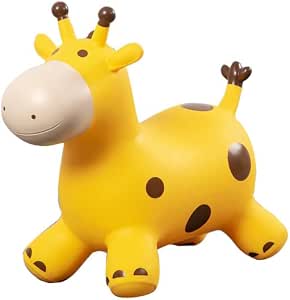
Inflatable giraffe bouncy hopper ride-on toy
Best bouncy ride-onAges 2+ in title

Giraffe Bouncy Horse Hopper

The Giraffe Hopper swaps wheels for bouncing. A child holds the ears or handles, sits astride the inflated animal and uses both feet to create the movement. That makes it a different proposition from a car or tractor: it needs soft landings, clear space around the whole toy and enough body control to remain upright.

An inflatable can be lighter to move and easier to tuck away than a moulded car, but correct inflation matters. Too soft may change the shape and sitting position, while too firm may not match the manufacturer’s instructions. Use the supplied or approved inflation method, check the plug and surface before play and stop if the material is punctured or damaged.

Keep the hopping zone away from sharp furniture edges, hard transitions, stairs and doorways. Socks on a slippery floor may reduce grip, so consider the child’s footwear and the surface together.

Best fit: A child aged two or older who enjoys bouncing and has a clear, level indoor play zone.
Main appealWhole-body hopping play
Check firstInflation, plug and floor grip
Check current price on Amazon AU →
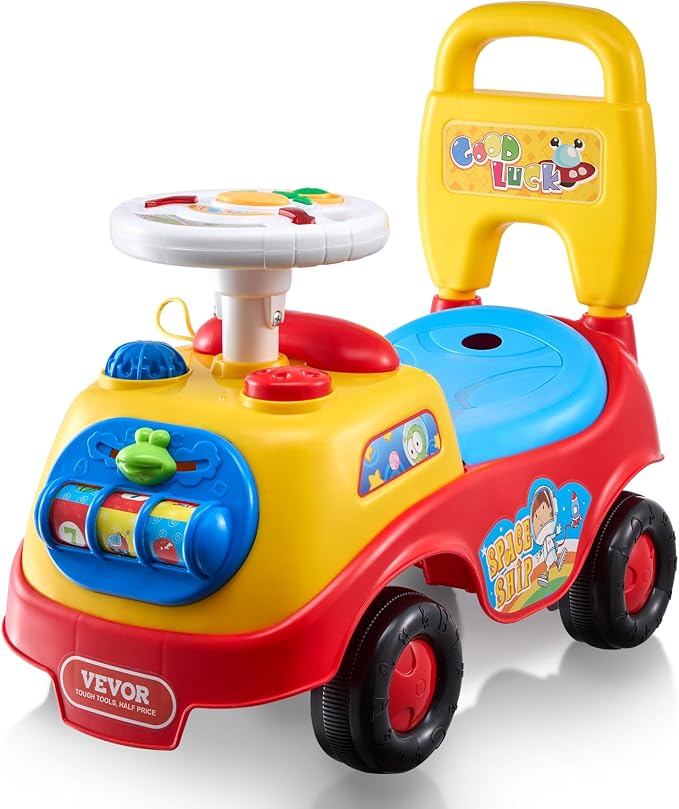
VEVOR foot-to-floor push car with steering wheel and under-seat storage
Best classic push car1 to 3 years in title

VEVOR Ride On Push Car

This VEVOR car follows the familiar sit, steer and push pattern. The child moves it with their feet, while the steering wheel, horn and music add the feeling of driving. Under-seat storage provides a place for a small soft toy or other suitable cargo, which can turn a short route into a delivery game.

Music and horn features mean the current listing should be checked for battery type and compartment design. If button or coin batteries are used, the Australian mandatory standards make secure compartments and warnings especially important. Do not use a battery-powered feature if its cover is loose, cracked or missing a screw.

The storage area also needs a quick adult check. Make sure the lid opens and closes as intended, does not create an unexpected pinch point and is not filled with stones, water or objects the child should not carry. A foot-to-floor car works best on a level route with generous turning room.

Best fit: Toddlers who want a recognisable car with steering, sounds and a little cargo space.
Main appealDriving play and storage
Check firstBatteries, lid and turning radius
Check current price on Amazon AU →
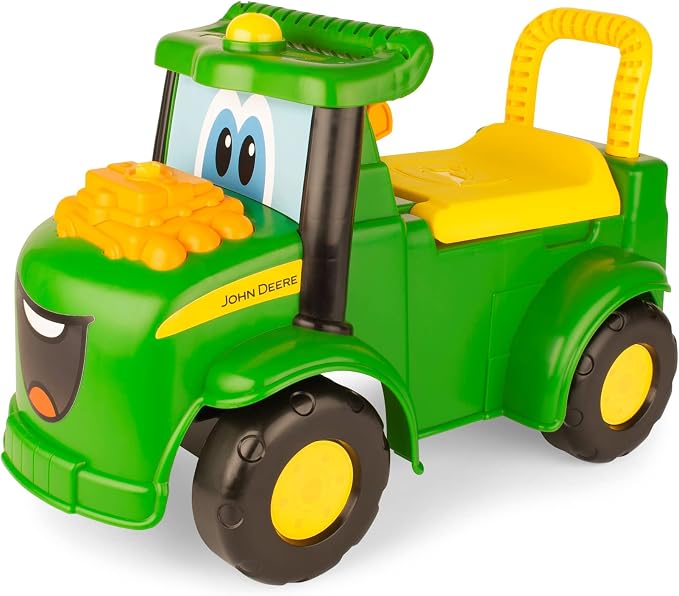
John Deere Johnny Tractor foot-to-floor ride-on with lights and sounds
Best light-and-sound tractorFarm theme

John Deere Johnny Tractor Foot-to-Floor Ride-On

The Johnny Tractor turns a simple scooting action into farm play. The John Deere colours and tractor shape provide the story, while lights and sounds add feedback when the child operates the controls. For a toddler already fascinated by tractors, that recognisable theme may prompt more repeated use than a neutral vehicle.

This is the electronic option among the two John Deere tractors in the list. Compare it with the simpler 35189 model if your priority is fewer features and less battery management. For Johnny Tractor, confirm the current battery requirement, whether batteries are included and how the compartment is secured.

Large decorative shapes can affect sightlines and turning. Set out a broad, uncluttered route and watch how far the front and rear extend when the child changes direction. Lights and sounds should remain an optional layer of play, not a reason to use a damaged battery compartment.

Best fit: A tractor fan who enjoys cause-and-effect controls as well as foot-powered movement.
Main appealFarm theme, lights and sounds
Check firstBattery security and clearance
Check current price on Amazon AU →
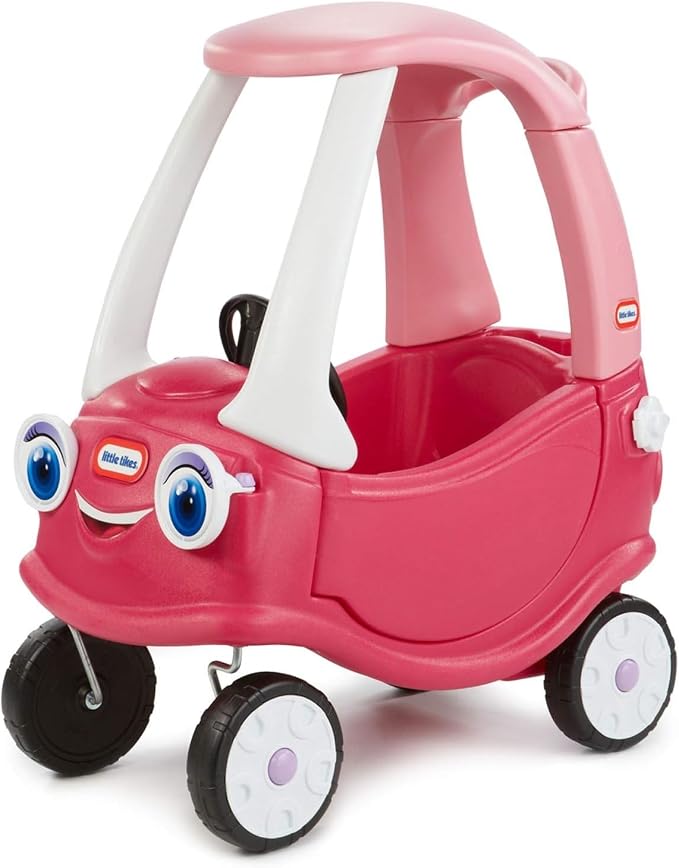
Little Tikes Princess Cozy Coupe pink and purple ride-on car
Best parent-push option18 months to 5 years in title

Little Tikes Princess Cozy Coupe

The Cozy Coupe is the most enclosed car shape in the shortlist. The listing describes both foot-to-floor movement and parent-push use, giving adults a way to guide the vehicle before or between child-powered rides. The tall body, door and roof also make it feel more like a tiny car than an open saddle ride-on.

Read the setup directions closely because parent-push and child-powered modes may use different components, including the removable floorboard. Confirm that the floor, door and handle are fitted for the intended mode before the child gets in. Never improvise a push mode or attach a rope.

The stated age span is broad, but physical fit can change long before the upper age is reached. Measure the assembled car, check the child’s seated leg position and think about where the large shell will be parked. Outdoor use still needs a level area away from vehicle access, slopes and water.

Best fit: Families who want a substantial pretend car with both foot-to-floor and adult-guided possibilities.
Main appealEnclosed car play and push handle
Check firstMode setup, floorboard and storage size
Check current price on Amazon AU →
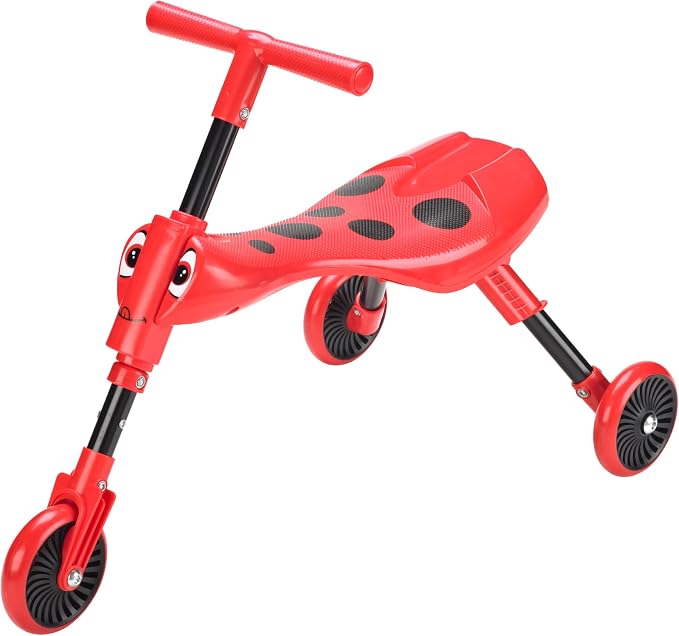
Red and black Scuttlebug Beetle three-wheel toddler ride-on
Best compact three-wheeler1 to 3 years in title

Scuttlebug Beetle Three-Wheel Ride-On

The Scuttlebug uses three wheels and a narrow bug-shaped body rather than the wide shell of a push car. It is the strongest compact candidate in this group and may be easier to carry or store when folded, subject to the exact current design and instructions.

Three wheels create a different stability pattern from four. The child still needs to steer without making abrupt turns and to keep both feet ready to push or stop. Start on a smooth, level surface with plenty of space. Avoid slopes and rough transitions that could catch a wheel.

Folding is useful only when the joints are correctly opened and locked for play. An adult should handle the fold, check each hinge before use and keep fingers clear. Do not let a child ride a partly opened product or use it as a step.

Best fit: Homes needing a lighter, more compact first ride-on for a confident walker.
Main appealThree-wheel compact design
Check firstFolding locks and smooth surfaces
Check current price on Amazon AU →
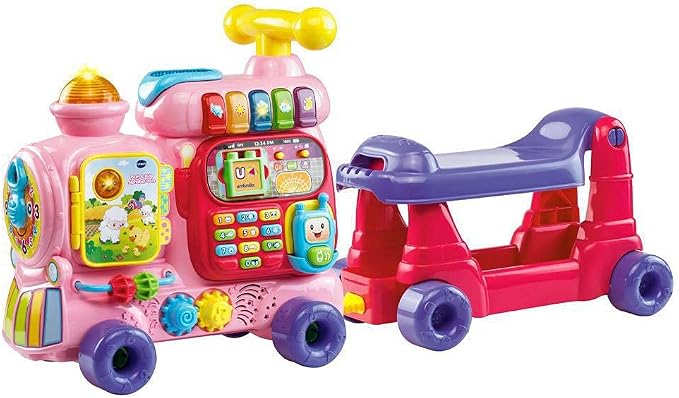
Pink VTech Push and Ride Alphabet Train
Best activity-train ride-onPush and ride

VTech Push & Ride Alphabet Train

The VTech Alphabet Train combines a ride-on body with an activity-toy theme. A child can push or ride the train and interact with the learning features described by the listing. That makes it one of the most feature-rich manual ride-ons here and a possible bridge between floor play and larger movement.

More activities also mean more components to account for. Check the exact contents of the current version, the minimum age, battery requirements and whether any pieces detach. Store every included piece with the train and keep items intended for older children away from younger siblings.

A push handle should not be treated as a walking aid unless the manufacturer expressly describes and approves that use. Watch the child’s balance and the train’s movement on the chosen floor. On hard surfaces, a wheeled toy may move faster than expected when a child leans heavily into it.

Best fit: Children who love trains, buttons, letters and switching between seated and floor-based play.
Main appealRide-on plus activity features
Check firstParts, batteries and push stability
Check current price on Amazon AU →
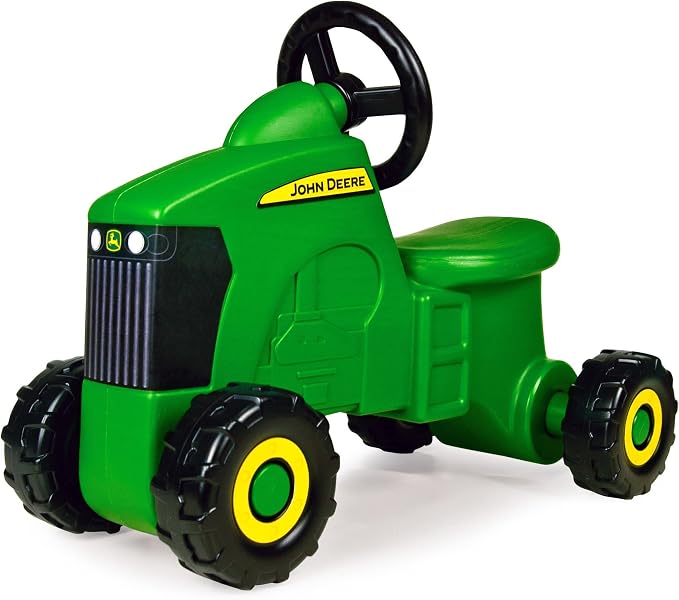
Green John Deere 35189 foot-to-floor tractor ride-on
Best straightforward tractorFoot-to-floor

John Deere 35189 Foot-to-Floor Tractor

This second John Deere option is for families who want the tractor identity without making lights and sounds the main event. The child powers the vehicle with their feet and can build farm stories around a simple recognisable shape.

“One size” in a title is not enough fit information. Check the current assembled dimensions, seat height, maximum load and minimum age. Compare those measurements with the child and with the intended route. A long bonnet or tractor body can need more turning space than a compact ride-on.

Simple does not mean maintenance-free. Inspect the wheels, axles, steering and body before use, especially after outdoor storage. Remove packed dirt from moving areas as the manufacturer allows, dry the toy and stop using it if plastic becomes cracked or hardware loosens.

Best fit: Tractor-loving toddlers whose families prefer a focused foot-to-floor design over extra electronics.
Main appealSimple farm-vehicle play
Check firstDimensions, load and current age grade
Check current price on Amazon AU →
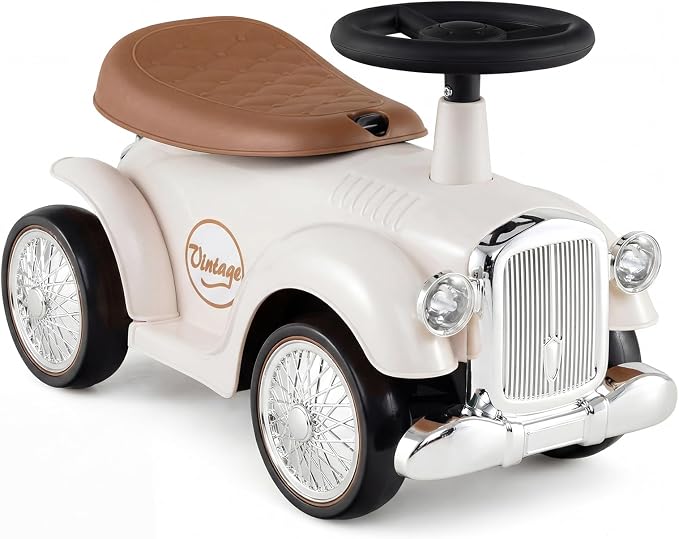
White HONEY JOY retro foot-to-floor ride-on car
Best retro styling18 to 36 months in title

HONEY JOY Retro Kids Ride-On

The HONEY JOY Retro Ride-On keeps the car play mechanical: a steering wheel, squeeze horn, child-powered movement and storage beneath the seat. The white vintage-style body will appeal to families who want a ride-on that looks less like a brightly coloured activity centre.

The listing mentions EVA wheels. Wheel material affects noise and feel, but the actual result depends on the floor, assembly, load and product version. Treat “quiet” or “smooth” impressions as something to assess in your own space, not a guarantee.

As with the VEVOR car, check the under-seat compartment and lid before every session. A squeeze horn avoids an electronic sound system, but the horn and steering assembly still need inspection for looseness. Keep the route wide enough for the body and use the vehicle only on surfaces allowed by the manufacturer.

Best fit: Families wanting classic car styling, a mechanical horn and a stated 18-to-36-month range.
Main appealRetro look and squeeze horn
Check firstWheel surface and storage lid
Check current price on Amazon AU →
Yellow HONEY JOY ride-on excavator with adjustable bucket and pulling cart
Best construction play3+ years in title

HONEY JOY Kids Ride-On Excavator

This is the most elaborate pretend vehicle in the manual group. The listing combines a ride-on excavator with an adjustable bucket, pulling cart, helmet, three toy stones, sound and under-seat storage. A child can move to a work site, scoop, transport and unload, giving the ride a purpose beyond travelling across the floor.

The 3+ age statement matters because the set includes several separate accessories. Count the helmet and toy stones after play, check their current dimensions and keep them away from younger children if they do not meet that child’s age grade. The sound feature also calls for a battery-compartment check.

Plan more space than the seat alone suggests. The bucket needs room to move, and the cart changes the vehicle’s total length and turning path. Use only in an area where the child cannot swing the bucket toward steps, glass, pets or another child.

Best fit: An older toddler or preschooler who loves construction stories and has room for the bucket and trailer.
Main appealRide, scoop and haul
Check firstAccessories, bucket clearance and batteries
Check current price on Amazon AU →
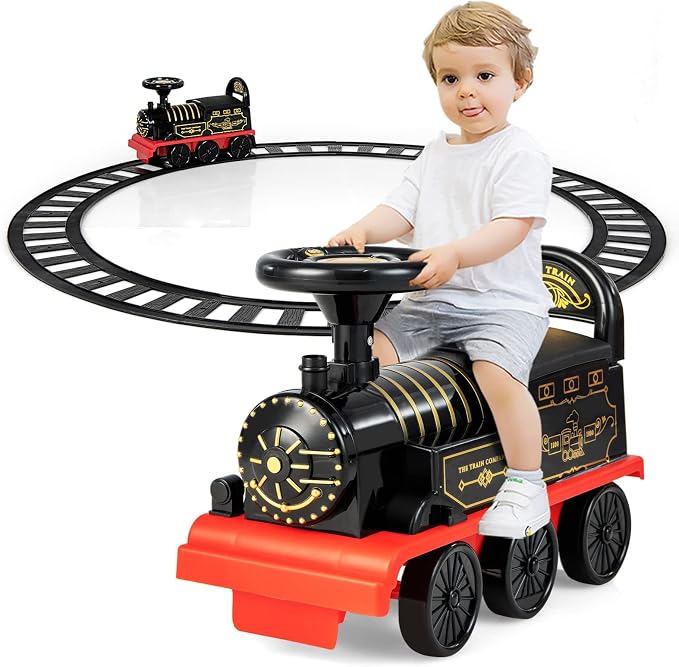
OLAKIDS retro-style 6V electric ride-on train with circular track
Best powered novelty6V train with track

OLAKIDS Kids Ride-On Train with Track

The OLAKIDS train is the only powered ride-on in this comparison. Its 6V system, lights, sounds and track create a miniature railway experience, while the retractable footrest and under-seat storage add practical features. The Christmas styling makes it particularly themed rather than an everyday neutral vehicle.

A track controls the route, but it does not remove the need for clear space and close supervision. Measure the complete track footprint and leave clearance around it. Assemble every track connection on a level surface and keep the circuit away from stairs, doors, heat sources and pedestrian traffic.

Read the charging instructions before first use. Adults should handle charging and battery access, use only the specified charger and check the cable and compartment for damage. Confirm the current speed, age range, load, runtime and whether the train can be used away from the track. Powered movement deserves more space and attention than a child-propelled toy.

Best fit: Families deliberately choosing a powered, track-based train and able to dedicate a safe level area to it.
Main appealPowered railway experience
Check firstTrack footprint, charging and speed
Check current price on Amazon AU →
Before the first lap

Ride-On Toy Safety in Australia

Safety starts with the exact product, then expands to the route around it. The Australian Government mandatory standard for toys for children up to and including 36 months addresses hazards including small parts and design requirements. It is a baseline, not a substitute for following the product’s age grade, assembly directions and warnings.

1

Build it exactly as directed

Adult assembly is part of the safety system. Tighten the specified fasteners, fit every cover and verify folding or conversion locks. Keep tools and unused hardware away from children. Recheck the assembly after the first few sessions and periodically after that.

2

Create a no-slope route

Use a level, uncluttered surface. Block access to stairs and keep ride-ons away from roads, driveways, pools, retaining walls and changes in level. A toddler cannot reliably judge traffic, speed or stopping distance.

3

Treat batteries as a separate hazard

For lights, music and horns, identify the battery type and inspect the compartment. Read the Australian button and coin battery standards. Stop using an electronic feature if the cover or fastener is damaged.

4

Inspect the whole toy

Look for cracks, loose wheels, worn axles, sharp edges, damaged cords, punctures and missing parts. Search the Product Safety Australia recalls database, particularly when buying second-hand.

5

Use helmets where the activity requires them

Follow the manufacturer’s protective-equipment directions and the rules that apply to the specific product and location. A low indoor push car, inflatable hopper, balance bike and road-legal bicycle are not interchangeable categories.

6

Supervise for the actual risk

Stay close enough to intervene before a child reaches a hazard. Supervision must account for siblings, pets, furniture, heat, water and vehicles, not just whether the toddler can propel the toy.

Stage, not race

Which Ride-On Style Suits Each Stage?

The age on a box is the minimum gate, not proof of readiness. Walking confidence, ability to sit and dismount, body size, understanding of simple limits and the play environment all matter. The Australian Government’s movement recommendations for birth to five years emphasise varied activity and active play. A ride-on can be one small part of that mix, not a replacement for running, climbing, dancing, outdoor exploration and rest.

New confident walkers

Low and slow

Look for a low seat, stable base, simple movement and a route with no slope. Follow the exact minimum age even if the child can already walk.

Roughly 18 months onward

Foot-to-floor

A push car may suit a child who can sit, steer and place both feet securely. Parent-push modes need the correct manufacturer setup.

From age two when listed

Bounce or three wheels

These ask for more dynamic balance. Start with a clear floor and short sessions rather than assuming the child will control speed immediately.

Age three and older when listed

Pretend systems

Excavators, accessories and powered toys add steps, pieces and spatial demands. Older does not remove the need for supervision.

How to Choose Without Overbuying

First decide what movement is missing from the toy collection. If the child already has a scooter-like toy, another narrow three-wheeler may add less than a car with a storage compartment. If the home already has a rocking toy, a five-mode product may duplicate more than it replaces.

Next, measure. Write down the product’s assembled width, length and height, then check the intended play route and storage position. Include the turning circle, parent handle, trailer, bucket or full track. A product that lives in a doorway becomes frustrating even when the child loves it.

Finally, choose the simplest product that supports the desired play. Lights, sounds, letters and accessories can be enjoyable, but each one creates another detail to assemble, power, count, clean or store. There is no developmental prize for buying the ride-on with the longest feature list.

Straight answers

Ride-On Toy Questions Parents Ask

What is the best first ride-on toy for a toddler?

A low, stable foot-to-floor toy with simple steering is a sensible starting point for many confident walkers, provided the manufacturer approves it for the child’s age and size. The child should be able to sit, place their feet correctly, stop and get off.

Are ride-on toys suitable for a 1-year-old?

Some products are marketed from 12 months, while others begin at 18 months, two years or three years. “One-year-old” is not a universal approval. Follow the exact manufacturer age grade and assess walking confidence, fit and the environment.

Are three-wheel ride-ons stable?

A three-wheel design has a different support shape from a four-wheel car and may tip during sharp turns or on uneven surfaces. Use it only on approved, level surfaces and supervise closely while the child learns how steering changes balance.

Is a parent-push ride-on better than foot-to-floor?

Neither is automatically better. A correct parent-push mode can help an adult guide the vehicle, while foot-to-floor movement gives the child direct control. Only use the modes and components specified by the manufacturer.

Can toddler ride-ons be used indoors?

Only if the manufacturer permits it and there is enough clear, level space. Protect the child from stairs, fireplaces, glass, sharp furniture and doorways. Consider floor grip, wheel marks and noise as well.

Can an indoor ride-on go outside?

Do not assume so. Check the product instructions. Outdoor surfaces add moisture, grit, UV exposure, heat and uneven transitions. Bring permitted portable toys under cover after use and let them dry before storage.

Do toddlers need a helmet on a ride-on toy?

Follow the product instructions and the rules for the activity and location. A balance bike or wheeled device used in a public area may require different protection from a low indoor push car. A helmet does not make stairs, roads, driveways or steep slopes safe.

Are electric ride-ons safe for toddlers?

They add powered movement, charging equipment and stopping-distance considerations. Choose only a product approved for the child’s exact age and load, follow charging directions, use it on a level enclosed route and provide close adult supervision.

How do I clean a ride-on toy?

Follow the manufacturer’s instructions for its materials and electronics. Remove loose dirt, use only approved cleaning methods, keep water away from battery areas and dry the toy before storage. Do not submerge a product unless the instructions explicitly allow it.

How long will a toddler use a ride-on?

Use ends when the child exceeds the age, height or weight guidance, no longer fits safely, loses interest or the toy becomes damaged. A broad advertised age range does not guarantee the same fit or play value for every child.

Research and Safety Sources

One good route beats a garage full of features

Choose the ride-on that fits the child, the floor and the space you actually have. Assemble it carefully, build a hazard-free route and stay close while the child learns how it moves. That combination matters more than lights, sounds or the number of modes printed on the box.