
Best Montessori Toys for 4 Year Olds in Australia
Four-year-olds often bring longer stories, stronger plans and more persistence to play. The best Montessori-style toys give the child something meaningful to build, match, balance, move, investigate or create.
Match the toy to the work your child enjoys
More planning, without a rigid checklist
Development varies. Use age information as context, not as a test.
Figures, blocks and vehicles may combine into longer pretend scenarios.
A child may return to a structure or puzzle and revise an earlier idea.
Simple shared games can practise listening and flexible responses.
Connecting, turning and placing may become more controlled.
Eight useful play directions
You do not need all eight. Choose the kind of challenge that fits your child, home and existing toy shelf.
| Pick | Best for | What the child does | Watch for |
|---|---|---|---|
| Pattern Blocks and Smart Sticks | Patterns and construction | Copies, rotates and invents | Small-piece suitability |
| PlanToys Timber Tumble | Balance | Places pieces and tests stability | Frustration level |
| SMART Games Safari Animals | Visual logic | Solves spatial challenges | Challenge level |
| Magnetic Fishing Puzzle | Hand control | Guides, lifts and matches | Magnet condition |
| Monkey Around | Movement | Copies actions and plays together | Clear floor space |
| Farm Screwdriver Board | Practical work | Turns and replaces pieces | Loose components |
| Interlocking Blocks | Engineering play | Connects, tests and rebuilds | Many small pieces |
| Ride On Excavator | Large-motor pretend play | Steers, scoops and acts out stories | Surface and supervision |
Our Montessori-style toy picks
Every pick encourages active participation, gives clear feedback and leaves room for decisions. Always confirm the current listing, age grade and warnings.
The child builds, matches, balances or moves.
The activity can grow with the child.
The child can see what happened and retry.
Age grade, parts and setting come first.

142 Piece Wooden Pattern Blocks and Smart Sticks
This set supports copying a visible design and inventing something original. Children can rotate shapes, compare lengths and discover that the same pieces solve a problem in different ways.

PlanToys Timber Tumble
A balancing game makes cause and effect visible. The child chooses a position, places a piece and sees whether the structure holds. A tumble is information, not failure.
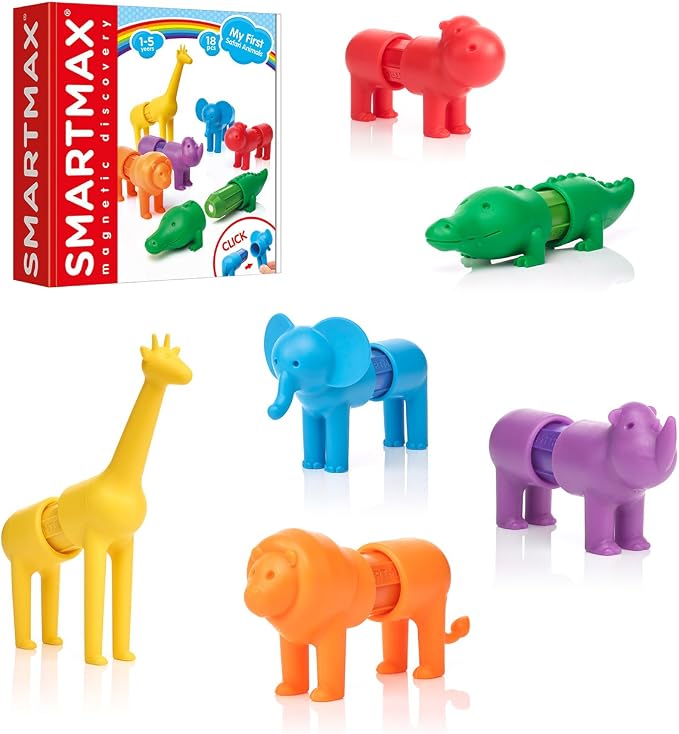
SMART Games My First Safari Animals
This visual logic activity asks the child to place and orient animal pieces to match a challenge. It suits children ready for more flexibility than a one-picture puzzle.

Melissa & Doug Magnetic Fishing Puzzle
Guiding a rod toward a target asks for slower movement than grabbing a piece by hand. Returning each catch adds matching and visual discrimination.

Peaceable Kingdom Monkey Around
A movement game turns listening, imitation and shared laughter into active play, especially when outdoor time is limited.

Wooden Farm Screwdriver Board, 16 Pieces
Turning a tool, holding the board steady and aligning a fastener are purposeful hand actions. The farm scene gives each piece a clear destination.
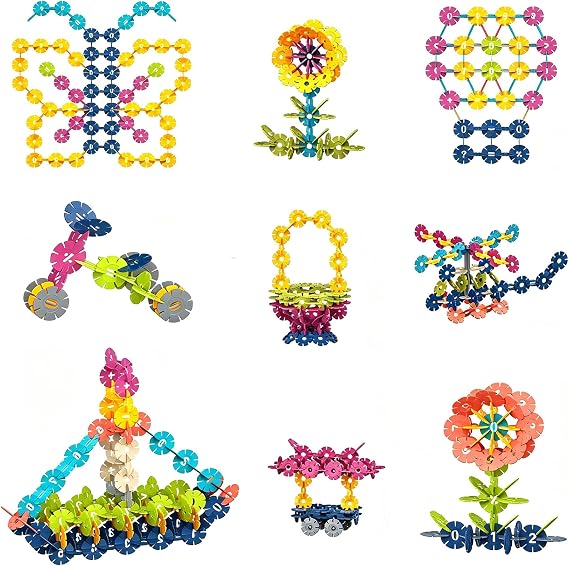
240 Piece Interlocking Building Blocks
Interlocking pieces let children test connections, repeat units and rebuild designs that do not work as expected.

HONEY JOY Kids Ride On Excavator
This is the least traditional Montessori-style pick, but steering, pushing and operating the scoop can become active cause-and-effect play.
Useful evidence, without turning toys into treatment
No retail toy guarantees intelligence, school readiness or a developmental outcome. Research helps identify valuable activities, not one scientifically best product.
Spatial play and construction
Construction asks children to notice shape, position and stability. Research has found associations between block building and early spatial or mathematical skills, but association does not prove that buying blocks causes higher achievement.
Guided play
Adults can support learning while preserving the child’s active role. A helpful prompt directs attention or reduces choices without taking over the solution.
Milestones are not tests
Milestone lists describe things many children can do by an age. They do not mean every child should want the same toy. Speak with a qualified professional about developmental concerns.
Whole environments matter
Montessori research generally examines classrooms, practices and complete learning environments. It does not show that an isolated product becomes educational because of a label.
Read the product, not only the article title
The current manufacturer age grade, warnings and instructions take priority. Marketplace listings can change.
Small parts
Store complex sets where younger children cannot reach them.
Magnets
Stop using a toy immediately if a magnet becomes loose.
Button batteries
Keep spare and used batteries inaccessible and compartments secure.
Ride-on spaces
Use a dry, flat area away from roads, water, steps and slopes.
Wear and damage
Check wood, seams, fasteners and plastic before play.
Recalls
Search the official recall database if a toy’s history is uncertain.
A quick buying test
Imagine what the child will do after the packaging is gone.
Can the child lead?
Prefer decisions and actions over watching a fixed performance.
Can challenge change?
Look for easier and harder ways to use the same material.
Is feedback visible?
A stable tower or completed match lets the child judge the result.
Does it fit?
Check dimensions, storage, noise and where it can be used.
Will parts stay together?
Trays and bags make sets easier to use and audit.
Is one enough?
Add a new play direction instead of repeating the same task.
Related ToyBloom guides
Frequently asked questions
Direct answers for common buying questions.
What are the best Montessori toys for a 4 year old?
Look for active building, matching, balancing, practical work, movement or imaginative play. Purpose, feedback, adjustable challenge and safety matter more than the word “Montessori”.
How many toys should be available?
There is no magic number. A small, visible selection is often easier to choose from. Rotate according to interest.
Do Montessori toys have to be wooden?
No. Purpose, simplicity, order and active use matter more than material.
Should every toy teach letters or numbers?
No. Construction, movement, pretend play, art and practical tasks are valuable too.
Is it okay to help with a puzzle?
Yes, with the smallest useful hint. Reduce choices or draw attention to one feature while leaving the final action to the child.
Are these products guaranteed to improve development?
No. Toys provide opportunities for activity. They do not guarantee intelligence, school results or developmental outcomes.
How do I choose a safe toy in Australia?
Follow current age grading, warnings and official safety guidance. Pay close attention to magnets, batteries, small pieces and ride-on environments.